Instructions
- Prepare the Cheesecake Filling: In a medium bowl, beat the softened cream cheese with an electric mixer until smooth and creamy, about 1-2 minutes.
- Add the granulated sugar to the cream cheese and beat until fully incorporated and no lumps remain.
- Stir in the egg yolk, vanilla extract, and all-purpose flour until just combined. Be careful not to overmix.
- Line a small baking sheet or plate with parchment paper. Drop the cheesecake mixture by the teaspoonful onto the prepared sheet. Aim for about 20-24 small mounds. These will be your cheesecake centers.
- Place the baking sheet with the cheesecake mounds into the freezer for at least 30 minutes, or until firm. This step is crucial for easy handling and preventing the filling from melting too quickly during baking.
- Prepare the Cookie Dough: In a medium bowl, whisk together the all-purpose flour, baking soda, and salt. Set aside.
- In a large bowl, using an electric mixer, cream together the softened unsalted butter, granulated sugar, and packed light brown sugar until light and fluffy, about 2-3 minutes.
- Beat in the large egg and then the additional egg yolk, one at a time, mixing well after each addition. Stir in the vanilla extract.
- Gradually add the dry ingredients (flour mixture) to the wet ingredients, mixing on low speed until just combined. Be careful not to overmix the dough.
- Fold in the semi-sweet chocolate chips until evenly distributed throughout the dough.
- Assemble the Cookies: Preheat your oven to 375°F (190°C). Line baking sheets with parchment paper.
- Take about 2 tablespoons of cookie dough and flatten it into a disc in the palm of your hand.
- Carefully place one frozen cheesecake mound in the center of the flattened cookie dough.
- Gently wrap the cookie dough around the cheesecake filling, sealing the edges completely to enclose the filling. Roll it into a ball. Ensure there are no cracks where the cheesecake can escape during baking.
- Repeat with the remaining cookie dough and cheesecake mounds.
- Place the stuffed cookie dough balls about 2 inches apart on the prepared baking sheets.
- Bake the Cookies: Bake for 10-12 minutes, or until the edges are golden brown and the centers are still slightly soft. The cheesecake filling will have puffed up and may show a slight crack, which is normal.
- Remove the cookies from the oven and let them cool on the baking sheets for 5-10 minutes before transferring them to a wire rack to cool completely. This allows the centers to set and prevents them from breaking.
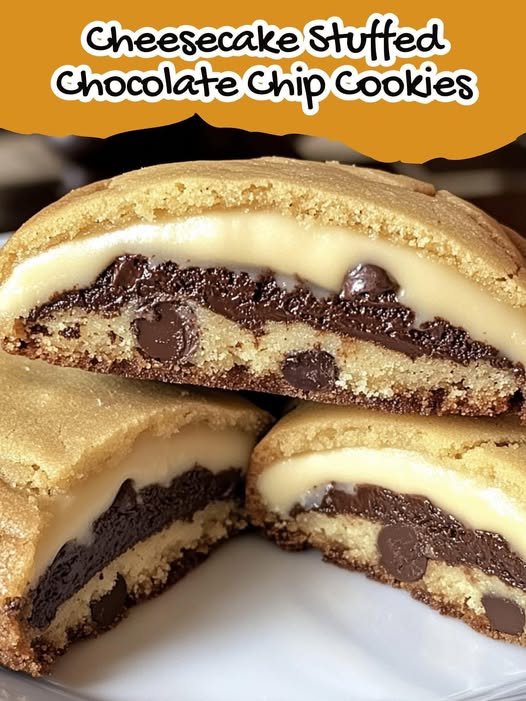
- Serve warm or at room temperature and enjoy your delicious Cheesecake Stuffed Chocolate Chip Cookies!
Cooking Tips and Variations
For the best results with your Cheesecake Stuffed Chocolate Chip Cookies, temperature is key. Ensure your cream cheese is softened but not warm for the filling; this will help achieve a smooth consistency. When freezing the cheesecake mounds, make sure they are thoroughly firm. If they are too soft, they will be difficult to encapsulate in the cookie dough and might melt out during baking. Similarly, using softened butter for the cookie dough is crucial for proper creaming and a tender cookie texture. If your butter is too cold, it won’t cream properly, and if it’s too warm, your cookies might spread too much.
Don’t overmix your cookie dough once you add the flour. Overmixing develops the gluten, leading to tougher cookies. Mix just until the flour streaks disappear. When assembling, take your time to fully seal the cheesecake filling within the cookie dough. Any gaps can lead to the filling oozing out, which, while still tasty, won’t look as appealing. If you find the cookie dough or cheesecake filling becoming too warm and sticky while assembling, pop them back into the fridge or freezer for a few minutes to firm up.
For variations, consider adding different flavors to the cheesecake filling. A pinch of lemon zest can brighten the flavor, or a teaspoon of cocoa powder can create a chocolate cheesecake center. You could also swirl in a small amount of fruit preserves, like raspberry or strawberry, for a fruity twist. For the cookie dough, try using different types of chocolate chips – milk chocolate, dark chocolate, or even white chocolate chips would be delicious. A mix of chopped nuts like walnuts or pecans could also be folded into the cookie dough for added crunch and flavor. You can also experiment with a sprinkle of sea salt on top of the cookies before baking for a sweet and salty contrast. For a festive touch, add a dash of peppermint extract to the cheesecake filling and use crushed candy canes as a topping during the holidays.
Storage and Reheating
To store your delicious Cheesecake Stuffed Chocolate Chip Cookies, allow them to cool completely first. Once cooled, place them in an airtight container. They can be stored at room temperature for up to 2-3 days, though because of the cream cheese filling, refrigeration is recommended for longer storage. If refrigerating, they will stay fresh for up to a week. The texture of the cheesecake filling will be firmer when cold, but still delightful.
For longer storage, these cookies freeze exceptionally well. Place the cooled cookies in a single layer on a baking sheet and freeze for about an hour until solid. Once frozen, transfer them to a freezer-safe airtight container or a heavy-duty freezer bag, separating layers with parchment paper to prevent sticking. They can be frozen for up to 2-3 months. Thaw frozen cookies overnight in the refrigerator or at room temperature for a few hours before serving.
To reheat, if you prefer a warm, gooey cookie, you have a couple of options. From room temperature, you can microwave a single cookie for 10-15 seconds until the chocolate is melty and the cheesecake is soft. Be careful not to overheat, as it can make the cookie tough. Alternatively, you can place them on a baking sheet and warm them in a preheated oven at 300°F (150°C) for about 5-7 minutes. This method helps to crisp up the edges of the cookie slightly while warming the filling through. If reheating from frozen, it’s best to thaw them first, then use one of the reheating methods above. Enjoying them slightly warm really brings out the best in both the cookie and the cheesecake filling.
Frequently Asked Questions
Can I make the cookie dough or cheesecake filling ahead of time?
Absolutely! Both components can be prepared in advance. The cheesecake filling can be made and frozen into mounds up to a week ahead of time. Keep them in an airtight container in the freezer. The cookie dough can be made and refrigerated for up to 3 days. If refrigerating the dough, let it sit out at room temperature for about 15-20 minutes before shaping, as it will be quite firm. You can also freeze the cookie dough for up to 3 months. Thaw it in the refrigerator overnight before using.
Why did my cheesecake filling ooze out of the cookies?
There are a few common reasons this might happen. First, ensure your cheesecake mounds are thoroughly frozen before you try to encase them in the cookie dough. If they are too soft, they will be difficult to handle and more prone to melting quickly. Second, it’s crucial to completely seal the cookie dough around the cheesecake filling. Make sure there are no cracks or openings where the filling can escape. Take your time to gently but firmly wrap the dough around the filling and roll it into a smooth ball. If the dough gets too warm and sticky during assembly, pop it back into the fridge for a few minutes to firm up.
Can I use a different type of flour or sugar?
While this recipe is optimized for all-purpose flour and a combination of granulated and light brown sugar, small adjustments can be made. For a slightly chewier cookie, you could consider using bread flour for a portion of the all-purpose flour, but be aware it will change the texture. For sugar, light brown sugar contributes to the chewiness and moisture, while granulated sugar adds crispness. Substituting one for the other entirely might alter the final texture significantly. For best results, stick to the specified types and quantities. Gluten-free flour blends may work, but success can vary greatly between brands and often requires additional binders or moisture adjustments.
My cookies spread too much. What went wrong?
Excessive spreading can be due to several factors. Make sure your butter is softened but not melted or too warm; overly soft butter will cause cookies to spread. Chilling the assembled cookie dough balls for 15-30 minutes before baking can also help prevent spreading, especially if your kitchen is warm. Ensure your oven temperature is accurate; an oven that runs too cool can lead to spreading as the butter melts before the cookie sets. Also, make sure you’re using the correct amount of flour; too little flour can result in a thinner, more spread-out cookie. Finally, avoid using dark-colored baking sheets as they absorb more heat and can cause cookies to spread and brown too quickly on the bottom.