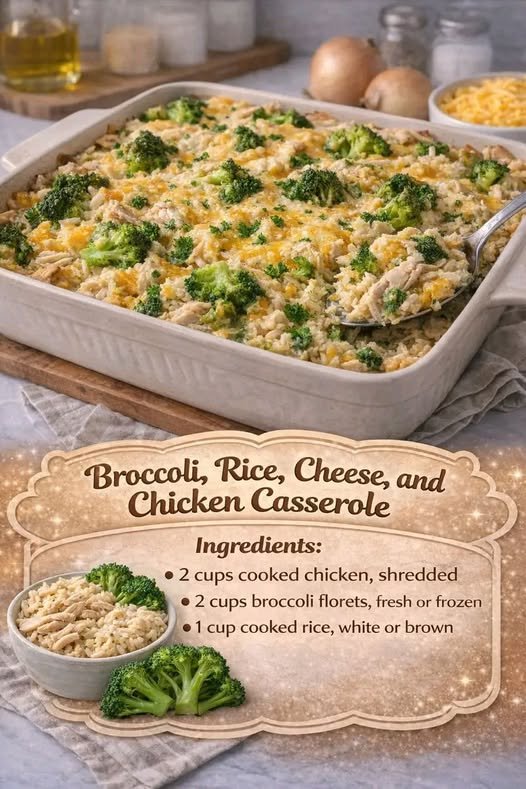
Instructions
- Preheat your oven to 375°F (190°C). Lightly grease a 9×13 inch baking dish.
- If not already cooked, prepare your chicken: Boil, bake, or pan-fry chicken breasts until fully cooked, then shred using two forks or a stand mixer. Set aside.
- Cook your rice according to package directions, if not already cooked. Set aside.
- Blanch or steam your broccoli florets: Bring a pot of lightly salted water to a boil. Add broccoli florets and cook for 2-3 minutes, just until bright green and tender-crisp. Immediately drain and plunge into an ice bath to stop cooking, then drain thoroughly. This prevents mushy broccoli in the casserole.
- In a large saucepan or Dutch oven, melt the butter over medium heat. Add the chopped onion and cook until softened and translucent, about 5-7 minutes. Add the minced garlic and cook for another minute until fragrant.
- Sprinkle the flour over the onion and garlic mixture. Cook, stirring constantly, for 1-2 minutes to create a roux. This helps prevent a raw flour taste.
- Gradually whisk in the warmed milk and chicken broth, a little at a time, ensuring no lumps form. Continue whisking until the sauce begins to thicken, about 5-7 minutes.
- Stir in the Dijon mustard, salt, black pepper, garlic powder, and nutmeg (if using).
- Remove the saucepan from the heat. Add 2 cups of the shredded sharp cheddar cheese and 1/2 cup of the shredded Colby Jack cheese to the sauce. Stir until the cheese is completely melted and the sauce is smooth and creamy. Taste and adjust seasonings as needed.
- In a large mixing bowl, combine the shredded cooked chicken, cooked rice, and blanched broccoli florets. Pour the creamy cheese sauce over the mixture and gently fold everything together until all ingredients are well coated.
- Transfer the entire mixture into the prepared 9×13 inch baking dish, spreading it evenly.
- Sprinkle the remaining 1 cup of sharp cheddar cheese and 1/2 cup of Colby Jack cheese over the top of the casserole.
- Bake for 25-30 minutes, or until the casserole is bubbling around the edges and the cheese on top is melted and golden brown. For an extra crispy, golden crust, you can place it under the broiler for the last 2-3 minutes, watching carefully to prevent burning.
- Once baked, remove the casserole from the oven and let it rest for 5-10 minutes before serving. This allows the sauce to set slightly, making it easier to serve.
- Garnish with fresh chopped parsley before serving.
Cooking Tips and Variations
Achieving a truly outstanding casserole often comes down to a few key techniques and knowing how to adapt the recipe to your taste or what you have on hand. Here are some tips for success and exciting variations to try:
- Perfectly Cooked Broccoli: The secret to tender-crisp broccoli that isn’t mushy in your casserole is blanching or steaming it briefly before adding. Cook it just until it’s bright green and slightly tender, then immediately shock it in an ice bath to stop the cooking process. This ensures it holds its texture beautifully through the baking process. Never add raw broccoli directly to the casserole, as it won’t cook evenly and may remain too firm.
- Creamy Sauce Secrets: For a lump-free, silky smooth cheese sauce, ensure your milk is warmed before adding it to the roux (the butter and flour mixture). Add the milk and broth gradually, whisking constantly to incorporate fully before adding more. This technique prevents lumps. If your sauce ends up too thick, you can thin it with a little extra warm milk or broth; if too thin, let it simmer gently for a few more minutes to reduce.
- Cheese Choices: While sharp cheddar and Colby Jack offer a classic, comforting flavor, don’t be afraid to experiment! Monterey Jack provides a milder, meltier quality, Gruyere adds a sophisticated nuttiness, and a touch of smoked Gouda can introduce a wonderful smoky depth. For a sharper punch, consider adding some grated Parmesan or Pecorino Romano to the sauce. A blend of cheeses often yields the most complex flavor.
- Protein Swaps: This casserole is incredibly versatile. Instead of chicken, consider using cooked turkey (especially great after Thanksgiving!), diced ham, or even browned ground beef or sausage. For a plant-based option, omit the chicken and add extra vegetables or a can of drained and rinsed chickpeas or white beans for protein. Smoked tofu or tempeh could also be interesting additions.
- Vegetable Add-ins: Boost the nutritional value and flavor by incorporating other vegetables. Sautéed mushrooms, diced carrots, frozen peas, or even a handful of spinach (wilted and squeezed dry) would be delicious additions. Make sure any hard vegetables are pre-cooked or blanched to ensure they are tender by the end of baking.
- Spice It Up: If you enjoy a little heat, a pinch of red pepper flakes added to the sauce will give it a subtle kick. A dash of your favorite hot sauce stirred into the individual servings or mixed into the sauce can also elevate the flavor profile. For an earthy, smoky note, a touch of smoked paprika can be a wonderful addition.
- Topping Ideas: For extra crunch and visual appeal, consider topping your casserole with something more than just cheese. A mixture of Panko breadcrumbs tossed with melted butter, crushed Ritz crackers, or even crispy fried onions can add a delightful textural contrast. Sprinkle these on top during the last 10-15 minutes of baking to prevent them from burning.
- Using Pre-Cooked Ingredients: To make this an incredibly quick weeknight meal, utilize pre-cooked staples. A rotisserie chicken is your best friend here – shred it, and you’re halfway there! Pre-cooked rice pouches or leftover rice also save significant time. This casserole is designed to be flexible and time-saving.
- Seasoning is Key: Don’t be shy with your seasonings. Taste the cheese sauce before adding it to the other ingredients. Adjust salt, pepper, and garlic powder to your preference. A well-seasoned sauce makes all the difference in the final dish.
- Resting Time: Do not skip the resting step! Allowing the casserole to rest for 5-10 minutes after baking helps the sauce to set and firm up slightly, making for cleaner slices and preventing a watery mess when serving. It also helps distribute the heat evenly.
Storage and Reheating
This casserole is fantastic for meal prep and makes delicious leftovers. Here’s how to store and reheat it properly:
- Refrigeration: Allow the casserole to cool completely to room temperature before storing. Cover the baking dish tightly with plastic wrap or aluminum foil, or transfer individual portions to airtight containers. It will keep well in the refrigerator for 3-4 days.
- Freezing: This casserole freezes beautifully! To freeze, ensure it is completely cooled. You can freeze the entire casserole in the baking dish (if it’s freezer-safe), tightly wrapped in multiple layers of plastic wrap and then foil. Alternatively, divide it into individual portions in freezer-safe containers. It will maintain its quality in the freezer for up to 2-3 months. Thaw overnight in the refrigerator before reheating.
- Reheating from Refrigerator: For individual portions, microwave on medium power until heated through, stirring occasionally, about 2-4 minutes. For a whole casserole, cover it with foil (to prevent the top from drying out) and bake in a preheated oven at 300°F (150°C) for 20-30 minutes, or until heated through. You can remove the foil for the last few minutes if you want to crisp up the top.
- Reheating from Frozen: If reheating a whole frozen casserole, it’s best to thaw it in the refrigerator first. If you’re reheating from frozen, cover tightly with foil and bake at 325°F (160°C) for 45-60 minutes, or until heated through. Individual frozen portions can be microwaved on a lower power setting for a longer duration, stirring frequently, or reheated in a covered oven-safe dish.
Frequently Asked Questions
Can I use frozen broccoli instead of fresh?
Yes, absolutely! Frozen broccoli florets work perfectly in this casserole. There’s no need to thaw them before blanching or steaming; just add them directly to boiling water for 2-3 minutes, then drain and shock in ice water as you would with fresh broccoli. Ensure they are well-drained before adding to the casserole to prevent excess moisture.
What kind of rice is best for this casserole?
While white rice (like long-grain or basmati) is commonly used and provides a light, fluffy texture, brown rice is also an excellent option for added fiber and a nuttier flavor. Just ensure your rice is fully cooked before adding it to the casserole. Avoid using instant rice as it can become mushy; regular cooked rice holds up much better.
Can I prepare this casserole ahead of time?
Yes, this casserole is a fantastic make-ahead meal! You can assemble the entire casserole (up to the point of baking) and cover it tightly with plastic wrap. Store it in the refrigerator for up to 24 hours. When ready to bake, let it sit at room temperature for about 20-30 minutes while your oven preheats, then bake as directed, possibly adding an extra 5-10 minutes to the baking time since it will be going into the oven cold.
How do I prevent the cheese sauce from becoming grainy or separating?
The key to a smooth cheese sauce is to add the cheese gradually and off the heat. Once your béchamel base is thickened, remove it from the stove before stirring in the shredded cheese. Stir until just melted and smooth. Overheating cheese or adding it to a rapidly boiling sauce can cause the fats to separate, leading to a grainy or oily texture. Using freshly shredded cheese (rather than pre-shredded, which often contains anti-caking agents) also helps achieve a creamier result.