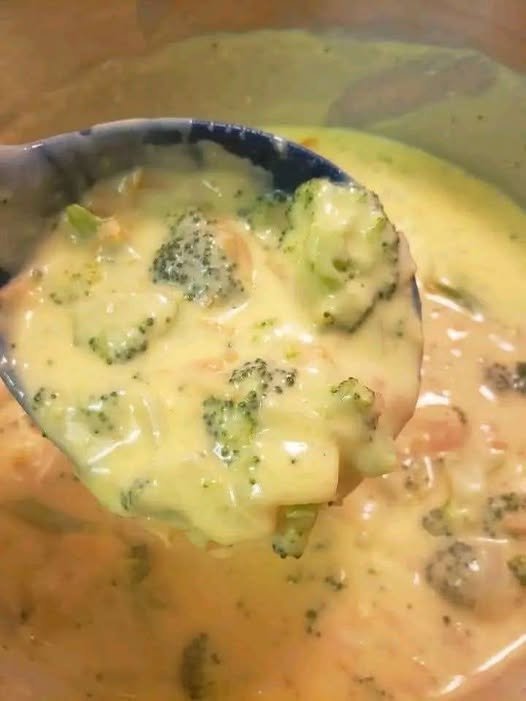
Instructions
- Melt the butter in a large Dutch oven or a heavy-bottomed pot over medium heat.
- Add the finely diced onion and cook, stirring occasionally, until softened and translucent, about 5-7 minutes. Do not brown.
- Add the minced garlic to the pot and cook for another minute until fragrant.
- Sprinkle the flour over the onion and garlic mixture. Stir constantly for 1-2 minutes to create a roux. This will help thicken the soup.
- Gradually whisk in the chicken or vegetable broth, ensuring no lumps of flour remain. Bring the mixture to a gentle simmer, whisking occasionally.
- Pour in the whole milk and heavy cream, continuing to whisk. Bring the soup back to a gentle simmer.
- Add the finely chopped broccoli florets, grated carrot, and diced potato to the pot. Stir well to combine.
- Reduce the heat to low, cover the pot, and let the soup simmer for 15-20 minutes, or until the broccoli and potatoes are very tender. Stir occasionally to prevent sticking.
- Once the vegetables are tender, remove the pot from the heat. If you prefer a smoother soup, carefully use an immersion blender to partially or fully blend the soup to your desired consistency. Alternatively, transfer about 2-3 cups of the soup to a regular blender (vent the lid and cover with a towel) and blend until smooth, then return to the pot.
- Return the pot to very low heat. Add the freshly grated sharp cheddar cheese, a handful at a time, stirring continuously until each addition is fully melted and incorporated before adding more. This gradual addition and low heat are crucial for a smooth, creamy texture and to prevent the cheese from clumping or becoming oily.
- Stir in the Dijon mustard (if using), salt, black pepper, and a pinch of nutmeg (if using). Taste and adjust seasonings as needed.
- Serve hot, garnished with extra shredded cheddar cheese or a sprinkle of fresh parsley, if desired.
Cooking Tips and Variations
For the absolute best results with your broccoli cheddar soup, always start with freshly grated cheddar cheese. Pre-shredded varieties often contain anti-caking agents like cellulose, which can prevent the cheese from melting smoothly and result in a grainy or clumpy texture. A good quality sharp or extra-sharp cheddar will provide the most robust flavor, but a medium cheddar works well too if you prefer a milder taste. When adding the cheese, ensure your soup is off the direct heat or on the lowest possible setting. High heat can cause the cheese to separate and become oily. Stir it in gradually, allowing each batch to melt completely before adding more, for that perfectly smooth, luscious consistency.
Don’t overcook your broccoli! While you want it tender, mushy broccoli can detract from the soup’s appeal. Add it at the right time and simmer just until it’s fork-tender. If you desire a thicker soup, you can increase the amount of flour in the roux by an extra tablespoon, or create a cornstarch slurry (1 tablespoon cornstarch mixed with 2 tablespoons cold water) and whisk it into the simmering soup at the end, allowing it to cook for a few minutes to thicken. For a healthier twist, you can reduce the amount of heavy cream and replace some of it with additional whole milk, or even use a portion of pureed cauliflower to boost the vegetable content and creaminess without adding extra fat.
This recipe is highly adaptable. To add a smoky depth, try incorporating some crispy crumbled bacon or pancetta as a garnish, or even cook the onions in a tablespoon of bacon fat before adding the butter. For a vegetarian option, simply ensure you use vegetable broth. You can also experiment with other cheeses – a touch of Gruyère or Monterey Jack can add another layer of flavor. If you like a little heat, a pinch of cayenne pepper or a dash of hot sauce can provide a subtle kick. Feel free to add other finely diced vegetables like bell peppers or zucchini during the simmering stage for extra nutrients and texture. For an even smoother soup, you can blanch the broccoli florets separately before adding them to the soup base, which helps them break down more easily during blending.
Storage and Reheating
Leftover broccoli cheddar soup stores beautifully in the refrigerator. Allow the soup to cool completely before transferring it to an airtight container. It will keep well for up to 3-4 days. When reheating, it’s best to do so gently on the stovetop over low to medium-low heat, stirring frequently. This prevents the cheese from separating or becoming oily. You may find that the soup has thickened considerably in the fridge; if so, you can thin it out to your desired consistency by adding a splash of milk or broth while reheating. Avoid reheating at a high boil, as this can negatively affect the texture of the cheese. While you can technically freeze broccoli cheddar soup, dairy-based soups with cheese can sometimes separate or become grainy upon thawing and reheating. If you choose to freeze it, store it in an airtight, freezer-safe container for up to 2-3 months. Thaw overnight in the refrigerator and reheat gently on the stovetop, whisking well to re-emulsify the ingredients and adding a splash of milk or cream if needed to restore its creamy texture.
Frequently Asked Questions
Why did my cheese soup turn out grainy?
A grainy texture in cheese soup is usually caused by adding the cheese too quickly, at too high a temperature, or using pre-shredded cheese with anti-caking agents. To prevent this, always use freshly grated cheese, add it gradually in small batches, and ensure the soup is off the heat or on very low heat when incorporating the cheese. Stir continuously until each addition is fully melted before adding more.
Can I make this soup ahead of time?
Yes, you can absolutely make this soup ahead of time! It often tastes even better the next day as the flavors have more time to meld. Store it in an airtight container in the refrigerator for up to 3-4 days. When reheating, do so gently on the stovetop over low heat, stirring occasionally, and add a little milk or broth if it’s too thick.
What’s the best way to make the soup smoother?
To achieve a smoother soup, you have a couple of options. An immersion blender is ideal; simply blend directly in the pot until you reach your desired consistency, whether partially blended for some texture or fully smooth. If you don’t have an immersion blender, carefully transfer about half of the soup (or the amount you wish to blend) to a regular blender, making sure to vent the lid and cover it with a kitchen towel to prevent hot liquid from splattering. Blend until smooth, then return to the pot and stir to combine with the unblended portion.
Can I use frozen broccoli instead of fresh?
Yes, you can use frozen broccoli, but there are a few things to keep in mind. You won’t need to thaw it first; simply add it directly to the soup when the recipe calls for fresh broccoli. However, frozen broccoli tends to release more water and can sometimes have a slightly softer texture than fresh. You may need to simmer the soup for a slightly shorter time to prevent it from becoming overly mushy, and you might want to consider reducing the amount of broth by a quarter cup initially, adding more later if needed, to account for the extra moisture from the frozen vegetables.