Instructions
- Prepare the Potatoes: Wash the baby potatoes thoroughly. In a large pot, cover the potatoes with cold water and add a generous pinch of salt. Bring to a boil over medium-high heat, then reduce heat and simmer until fork-tender, about 15-20 minutes depending on their size. Drain well and set aside.
- Preheat Oven and Season Asparagus: Preheat your oven to 400°F (200°C). On a baking sheet, toss the snapped asparagus spears with 1 tablespoon of olive oil, garlic powder, onion powder, salt, and pepper. Spread in a single layer.
- Roast Asparagus and Potatoes: Add the cooked baby potatoes to the baking sheet with the asparagus. Drizzle the potatoes with 1 tablespoon of olive oil, and season with salt and pepper. Toss gently to coat. Roast in the preheated oven for 10-15 minutes, or until the asparagus is tender-crisp and the potatoes are slightly golden.
- Prepare the Salmon: While the vegetables are roasting, pat the salmon fillets very dry with paper towels. This is crucial for achieving a good crust. In a small bowl, combine the blackening seasoning, a pinch of salt, and pepper. If using, add cayenne pepper for extra heat. Generously coat both sides of each salmon fillet with the blackening seasoning, pressing it gently to adhere.
- Blacken the Salmon: Heat a large cast-iron skillet (or other heavy-bottomed skillet) over medium-high heat until it is smoking lightly. Add the remaining 2 tablespoons of olive oil to the hot skillet, swirling to coat the bottom. Carefully place the seasoned salmon fillets, skin-side up (if skin-on), into the hot skillet.
- Cook the Salmon: Cook for 3-4 minutes per side, depending on the thickness of the fillets, until a dark, flavorful crust forms and the salmon is cooked through and flakes easily with a fork. Be careful not to overcrowd the pan; cook in batches if necessary.
- Add Cheese to Asparagus: Once the asparagus and potatoes are roasted, remove the baking sheet from the oven. Sprinkle the shredded mozzarella cheese evenly over the asparagus. Return to the oven for another 2-3 minutes, or until the cheese is melted and bubbly. For extra browning, you can switch to the broiler for the last minute, watching carefully to prevent burning.
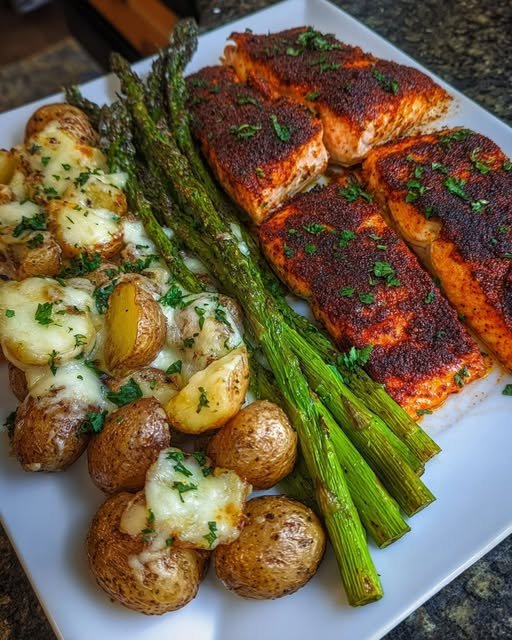
- Serve: Arrange the blackened salmon fillets on plates alongside the cheesy asparagus and roasted baby potatoes. Garnish with fresh chopped parsley and a lemon wedge. Serve immediately and enjoy!
Cooking Tips and Variations
For the best blackening results, a cast-iron skillet is your best friend. Its ability to retain and distribute high heat evenly creates that perfect dark crust. Ensure your pan is smoking hot before adding the salmon, and don’t overcrowd it, as this can lower the pan’s temperature and steam the fish instead of searing it. Patting the salmon dry before seasoning is also key; excess moisture will prevent the spices from adhering and developing a crisp crust.
If you’re not a fan of salmon, this blackening technique works wonderfully with other firm white fish like cod, mahi-mahi, or even chicken breast. For the potatoes, while boiling then roasting provides a lovely texture, you can skip the boiling and simply roast them from raw if you prefer. Just cut them into smaller, more uniform pieces and roast for a longer duration, about 30-40 minutes, tossing occasionally, until tender and golden.
To vary the cheesy asparagus, experiment with different cheeses. A sharp cheddar, nutty Gruyere, or even a sprinkle of Parmesan can add a unique flavor profile. For a spicier kick, increase the amount of cayenne pepper in your blackening seasoning, or add a pinch of red pepper flakes to the asparagus. If you prefer a milder taste, simply reduce or omit the cayenne. You can also add other vegetables to the roasting pan, such as bell peppers or cherry tomatoes, for an even more colorful and nutrient-rich meal.
Another fantastic variation for the salmon is to grill it. Prepare the salmon with the blackening seasoning as instructed, then grill over medium-high heat for 3-5 minutes per side, depending on thickness, until cooked through. This adds a wonderful smoky flavor that complements the spices beautifully. A squeeze of fresh lime juice instead of lemon can also offer a zesty twist to the finished dish.
Storage and Reheating
Leftovers of this delicious meal can be stored in an airtight container in the refrigerator for up to 2-3 days. To reheat, the best method for the salmon is to gently warm it in a skillet over low heat or in an oven preheated to 275°F (135°C) until just heated through, about 10-15 minutes. Be careful not to overcook, as salmon can dry out easily. For the asparagus and potatoes, you can reheat them in the oven at 350°F (175°C) for about 10-15 minutes, or until warmed through and the cheese is re-melted. You can also use a microwave, but the texture of the salmon and asparagus might become softer.
Frequently Asked Questions
What is blackening seasoning?
Blackening seasoning is a robust spice blend typically used in Cajun and Creole cuisine. It usually consists of paprika, cayenne pepper, onion powder, garlic powder, dried thyme, dried oregano, and salt and pepper. When applied to food and cooked at high heat in a cast-iron skillet, it forms a dark, flavorful crust without actually burning the food, creating a distinctive smoky and spicy flavor.
Can I make this dish ahead of time?
While this dish is best enjoyed fresh, you can do some prep work in advance. The blackening seasoning can be mixed ahead of time. You can also wash and cut the baby potatoes a day in advance, storing them in cold water in the refrigerator. The asparagus can be snapped and stored dry in the fridge. However, for the best texture and flavor, cook the salmon right before serving.
What are the benefits of eating salmon?
Salmon is a highly nutritious fish, well-known for being an excellent source of Omega-3 fatty acids, which are crucial for heart health, brain function, and reducing inflammation. It’s also rich in high-quality protein, essential vitamins like D and B12, and minerals such as selenium and potassium. Regular consumption of salmon can contribute to overall well-being and a balanced diet.