Instructions
- Prepare the Blackening Spice Blend: In a small bowl, combine garlic powder, onion powder, smoked paprika, cayenne pepper, dried oregano, dried thyme, ground cumin, and white pepper. Mix well.
- Prepare the Salmon: Pat salmon fillets very dry with paper towels. This is crucial for a good crust. Drizzle lightly with olive oil, then generously coat both sides of each fillet with the blackening spice blend, pressing gently to adhere. Set aside.
- Prepare the Potatoes: Place peeled and cut potato chunks in a large pot. Cover with cold water by about an inch. Add a generous pinch of salt. Bring to a boil over high heat, then reduce heat to medium-low and simmer until potatoes are fork-tender, about 15-20 minutes.
- Cook the Broccoli: While potatoes are boiling, preheat your oven to 400°F (200°C) or prepare a steamer basket. For roasting: Toss broccoli florets with 1 tablespoon olive oil, salt, and pepper on a baking sheet. Roast for 15-20 minutes, or until tender-crisp and slightly charred. For steaming: Steam broccoli for 5-7 minutes, until tender-crisp.
- Make the Creamy Mashed Potatoes: Once potatoes are tender, drain them thoroughly in a colander. Return the drained potatoes to the hot pot over low heat for a minute or two to evaporate any remaining moisture. Add 4 tablespoons of unsalted butter, heavy cream, softened cream cheese (if using), and milk to the pot. Mash with a potato masher or use an immersion blender for extra smoothness until desired consistency is reached. Season generously with salt and pepper to taste. Keep warm, covered.
- Blacken the Salmon: Heat a heavy-bottomed skillet (cast iron is ideal) over high heat until it’s smoking hot. Add 1 tablespoon of unsalted butter to the skillet. Once the butter is melted and sizzling, carefully place the salmon fillets, seasoned-side down, into the hot skillet. Cook for 3-4 minutes per side, or until a dark, crusty “blackened” exterior forms and the salmon is cooked through to your desired doneness (internal temperature reaches 145°F/63°C for medium-rare). Remove salmon from the skillet and set aside on a plate.
- Cook the Shrimp: In the same skillet (add another 1 tablespoon of butter if needed), add the peeled and deveined shrimp. Cook for 2-3 minutes, stirring occasionally, until shrimp turn pink and opaque. If desired, deglaze the pan with 1/4 cup chicken broth or white wine, scraping up any browned bits from the bottom of the pan to create a light sauce. Season shrimp with a pinch of salt and pepper.
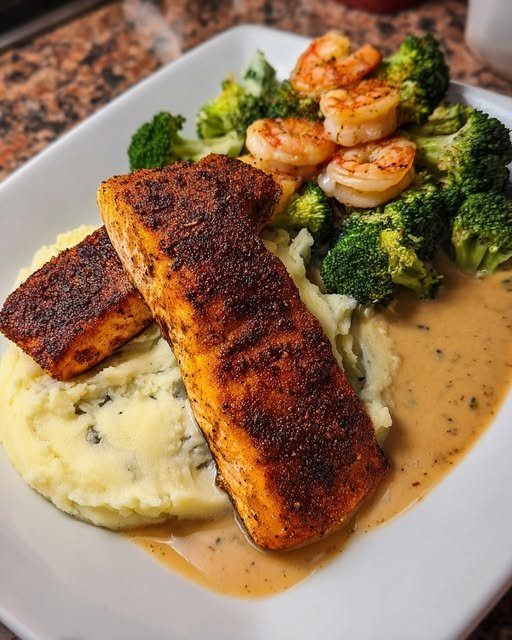
- Assemble and Serve: Spoon a generous mound of creamy mashed potatoes onto each plate. Top with a blackened salmon fillet. Arrange the cooked shrimp and roasted/steamed broccoli alongside. Drizzle any pan sauce from the shrimp over the plate. Garnish with fresh chopped parsley and serve immediately with lemon wedges.
Cooking Tips and Variations
For the Perfect Blackened Salmon: The key to true blackening is a very hot pan. Use a cast-iron skillet if you have one, and let it preheat on high heat until it just begins to smoke. Patting the salmon dry is non-negotiable; moisture will prevent a good crust. Don’t overcrowd the pan, cook in batches if necessary. If you’re sensitive to smoke, open a window and turn on your kitchen fan.
Achieving Ultra-Creamy Mashed Potatoes: For the silkiest mash, use Russet or Yukon Gold potatoes, as they are starchy and break down beautifully. Adding cream cheese alongside butter and heavy cream takes the creaminess to another level. Don’t overmix your mashed potatoes; it can make them gummy. Mash just until smooth. For an even smoother texture, an immersion blender or a potato ricer works wonders.
Spice Level Adjustment: The cayenne pepper in the blackening seasoning is what provides the heat. Feel free to increase it for a spicier kick or reduce it (or omit it entirely) for a milder flavor. You can also add a pinch of brown sugar to the spice blend for a touch of sweetness that balances the heat.
Vegetable Variations: While broccoli is fantastic, feel free to substitute or add other vegetables. Asparagus, green beans, or even roasted Brussels sprouts would be delicious. For a touch of color and sweetness, sauté some bell peppers with the shrimp.
Other Seafood Options: Don’t have salmon? This blackening technique works wonderfully with other firm white fish like cod, mahi-mahi, or even chicken breast. Adjust cooking times accordingly.
Adding a Sauce: While the pan sauce from cooking the shrimp is simple and delicious, you could also whip up a quick lemon-butter sauce or a creamy dill sauce to complement the salmon. A drizzle of balsamic glaze can also add a nice tangy contrast.
Storage and Reheating
Storage: Leftovers of Blackened Salmon & Creamy Mash Plate should be stored in separate airtight containers in the refrigerator. The salmon, shrimp, and mashed potatoes will keep for up to 2-3 days. The broccoli will also last 2-3 days in the fridge.
Reheating Salmon: To reheat salmon without drying it out, preheat your oven to 275°F (135°C). Place the salmon on a baking sheet, cover loosely with foil, and heat for about 10-15 minutes, or until warmed through. Alternatively, you can gently warm it in a skillet over low heat with a lid, adding a tablespoon of water or broth to create steam. Avoid microwaving salmon if possible, as it can make it rubbery.
Reheating Mashed Potatoes: Mashed potatoes can be reheated gently on the stovetop over low heat, stirring frequently, adding a splash of milk or cream to restore their creamy texture. You can also reheat them in the microwave in 30-second intervals, stirring in between, until heated through. For oven reheating, place in an oven-safe dish, cover with foil, and bake at 300°F (150°C) until warm.
Reheating Shrimp: Shrimp reheat best in a skillet over medium-low heat for just a minute or two, until warmed through. Overheating will make them tough. microwaving is generally not recommended for shrimp.
Reheating Broccoli: Broccoli can be reheated in the microwave for 1-2 minutes, or quickly sautéed in a pan until warm. For best texture, a quick reheat in a toaster oven or air fryer is also a good option.
Frequently Asked Questions
What is the difference between blackened and pan-seared salmon?
While both involve cooking in a pan, blackening uses a specific blend of robust spices and a very hot skillet (often cast iron) to create a dark, almost charred, crust. The high heat and spices create a distinct smoky, spicy flavor and a crispy exterior while keeping the inside moist. Pan-searing typically uses less aggressive heat and aims for a golden-brown crust, focusing more on the natural flavors of the fish.
Can I make the blackening spice blend ahead of time?
Absolutely! Preparing the blackening spice blend in advance is a great time-saver. Simply mix all the dry spices together and store them in an airtight container in a cool, dark place. It will stay fresh and potent for several months, making it convenient to whip up this dish or other blackened recipes whenever the craving strikes.
What kind of potatoes are best for creamy mashed potatoes?
For the creamiest mashed potatoes, starchy potatoes like Russet or Yukon Gold are your best bet. Russets break down beautifully and absorb butter and cream wonderfully, resulting in a fluffy, smooth texture. Yukon Golds offer a naturally buttery flavor and a slightly denser, yet still very creamy, mash. Avoid waxy potatoes like red or new potatoes, as they tend to become gummy when mashed.