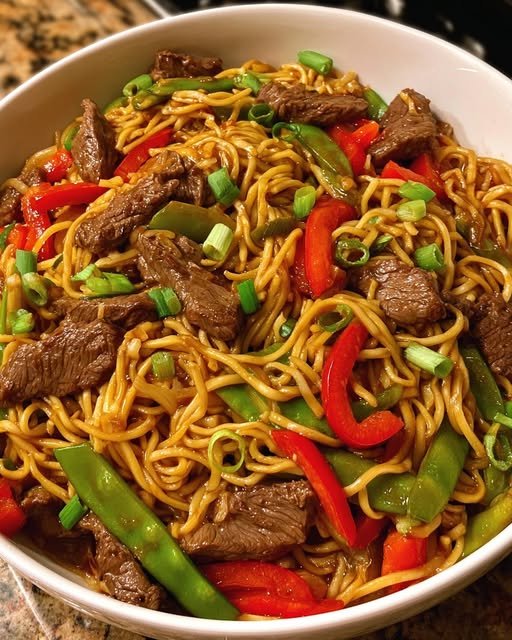
Instructions
- Prepare the Beef: In a medium bowl, combine the thinly sliced beef with the marinade ingredients (1 tablespoon soy sauce, 1 tablespoon cornstarch, 1 teaspoon sesame oil, 1/2 teaspoon black pepper). Toss well to coat the beef evenly. Let it marinate at room temperature for at least 15-20 minutes, or refrigerate for up to 30 minutes. This step is crucial for tenderizing the beef and locking in flavor.
- Cook the Noodles: Bring a large pot of salted water to a rolling boil. Add the lo mein noodles and cook according to package directions until al dente. This usually takes 3-5 minutes for fresh noodles or 6-8 minutes for dried. Do not overcook. Drain the noodles thoroughly and immediately rinse them under cold water to prevent them from sticking together. Toss with a tiny bit of cooking oil (about 1 teaspoon) to prevent clumping. Set aside.
- Prepare the Stir-Fry Sauce: In a small bowl, whisk together all the stir-fry sauce ingredients: 1/4 cup soy sauce, 2 tablespoons oyster sauce, 1 tablespoon rice vinegar, 1 tablespoon brown sugar, 1 teaspoon sesame oil, 1/2 teaspoon white pepper, 1 tablespoon cornstarch, and 1/4 cup water or chicken broth. Whisk until the cornstarch is fully dissolved and there are no lumps. Set aside.
- Stir-Fry the Beef: Heat 1 tablespoon of cooking oil in a large wok or a large, heavy-bottomed skillet over high heat until shimmering and almost smoking. Add the marinated beef in a single layer, working in batches if necessary to avoid overcrowding the pan. Cook for 1-2 minutes per side until beautifully browned but still slightly pink in the center. Avoid overcooking, as the beef will continue to cook later. Remove the cooked beef from the wok and set aside on a plate.
- Stir-Fry the Vegetables: Add the remaining 1 tablespoon of cooking oil to the same hot wok. Add the sliced yellow onion, red bell pepper, and green bell pepper. Stir-fry for 3-4 minutes, or until the vegetables are vibrant and tender-crisp. You want them to retain a slight bite.
- Add Aromatics: Push the vegetables to one side of the wok. Add the minced garlic and grated ginger to the cleared space. Sauté for about 30 seconds until fragrant, being careful not to burn the garlic.
- Combine and Sauce: Return the cooked beef to the wok with the vegetables and aromatics. Give the prepared stir-fry sauce a quick re-whisk (as cornstarch tends to settle) and pour it over the beef and vegetables. Toss everything together, continuously stirring, for 1-2 minutes until the sauce thickens and coats all the ingredients.
- Add Noodles: Add the cooked and drained noodles to the wok. Using tongs, toss everything together vigorously until the noodles are fully coated with the sauce and thoroughly combined with the beef and vegetables. Cook for another 1-2 minutes to ensure everything is heated through.
- Serve: Transfer the Beef Stir-Fry Noodles with Bell Peppers to serving bowls. Garnish generously with chopped green onions and a sprinkle of sesame seeds, if using. Serve immediately and enjoy!
Cooking Tips and Variations
Tips for Best Results:
- Thinly Slice the Beef: This is key for tender beef that cooks quickly. Partially freezing the beef for 20-30 minutes before slicing can make it much easier to cut into thin, even strips against the grain.
- Hot Wok is Essential: For an authentic stir-fry, cook over high heat. This creates that desirable “wok hei” (breath of the wok) flavor and ensures the ingredients sear rather than steam. If your pan isn’t hot enough, your stir-fry will be watery.
- Don’t Overcrowd the Pan: Cook the beef in batches if necessary. Overcrowding lowers the pan’s temperature and prevents proper searing, leading to tougher meat.
- Prep Ahead: Stir-frying is a fast-paced cooking method. Have all your ingredients chopped, sauces mixed, and noodles cooked before you even turn on the heat. This is called “mise en place” and makes the process smooth and stress-free.
- Al Dente Noodles: Cook your noodles just until al dente, as they will continue to cook slightly when tossed with the hot sauce and other ingredients. Rinsing them in cold water after draining stops the cooking process and removes excess starch.
- Adjust Sauce Thickness: If your sauce is too thin, you can make a slurry of 1 teaspoon cornstarch mixed with 1 tablespoon cold water and stir it into the simmering sauce until desired thickness is reached. If it’s too thick, add a splash more water or broth.
Recipe Variations:
- Vegetable Swap: Feel free to customize your veggies! Broccoli florets, snap peas, carrots (julienned), mushrooms, baby corn, or bok choy would all be delicious additions or substitutions. Add heartier vegetables like broccoli at the beginning of the vegetable stir-fry step to ensure they cook through.
- Spicy Kick: For those who love a bit of heat, add 1-2 teaspoons of chili garlic sauce, sriracha, or a pinch of red pepper flakes to the stir-fry sauce. You can also garnish with freshly sliced chilies.
- Different Protein: This recipe is incredibly versatile. Substitute the beef with chicken breast or thighs (sliced), shrimp, or even firm tofu for a vegetarian option. Adjust cooking times accordingly. For tofu, press it well to remove excess water, then cut into cubes and pan-fry until golden before adding to the stir-fry.
- Noodle Alternatives: While lo mein noodles are classic, you can use other types of noodles like chow mein, udon noodles for a chewier texture, or even spaghetti or linguine in a pinch. Rice noodles would also work for a gluten-free option (ensure soy sauce is gluten-free).
- Extra Flavor Boost: A dash of fish sauce (1 teaspoon) can add an extra layer of umami to the stir-fry sauce. A squeeze of lime juice at the end can brighten the flavors.
Storage and Reheating
This Beef Stir-Fry Noodles dish is fantastic for meal prepping and makes for delicious leftovers!
- Storage: Allow the stir-fry to cool completely before transferring it to an airtight container. Store in the refrigerator for up to 3-4 days.
- Reheating: For best results, reheat the stir-fry in a skillet or wok over medium heat. Add a splash of water or broth (1-2 tablespoons) to help loosen the noodles and sauce, and stir occasionally until heated through. You can also reheat in the microwave, but the noodles might become a bit softer. Reheat in 1-minute intervals, stirring in between, until piping hot.
Frequently Asked Questions
How do I prevent my beef from being tough?
The key to tender beef in stir-fries is proper preparation. First, always slice the beef thinly against the grain. This shortens the muscle fibers, making the beef easier to chew. Second, marinating with cornstarch (as in this recipe) creates a protective coating that locks in moisture and prevents the beef from drying out during the high-heat cooking process. Finally, avoid overcooking the beef; sear it quickly until just browned, as it will continue to cook when you add it back to the wok with the sauce.
Can I make this recipe gluten-free?
Absolutely! To make this Beef Stir-Fry Noodles recipe gluten-free, you will need to replace the soy sauce with a gluten-free tamari. Ensure that your oyster sauce is also gluten-free (some brands offer this) or omit it and increase the tamari slightly for a similar umami depth. Additionally, make sure to use gluten-free noodles, such as rice noodles or specific gluten-free lo mein alternatives. Always double-check ingredient labels to ensure all components are certified gluten-free.
What’s the best type of noodle for stir-fry?
For this Beef Stir-Fry Noodles recipe, lo mein or chow mein noodles are ideal. Lo mein noodles are typically thicker and chewier, designed to be tossed with the sauce, while chow mein noodles are often thinner and sometimes pre-fried for a crispier texture. If you can’t find these, fresh or dried egg noodles work wonderfully. In a pinch, even spaghetti or linguine can be a good substitute, offering a similar mouthfeel. The most important thing is to cook them al dente so they hold up well to the stir-frying process and don’t become mushy.
Why is my stir-fry sauce too thin or too thick?
The consistency of your stir-fry sauce largely depends on the cornstarch. If your sauce is too thin, it likely needs more cornstarch. You can create a quick slurry by mixing 1 teaspoon of cornstarch with 1 tablespoon of cold water, then slowly stir this into the simmering sauce in the wok until it reaches your desired thickness. If the sauce is too thick, simply add a splash more water or chicken broth, a tablespoon at a time, until it thins out to the perfect consistency. Always make sure to whisk your sauce well before adding it to the wok, as cornstarch can settle at the bottom of the bowl.