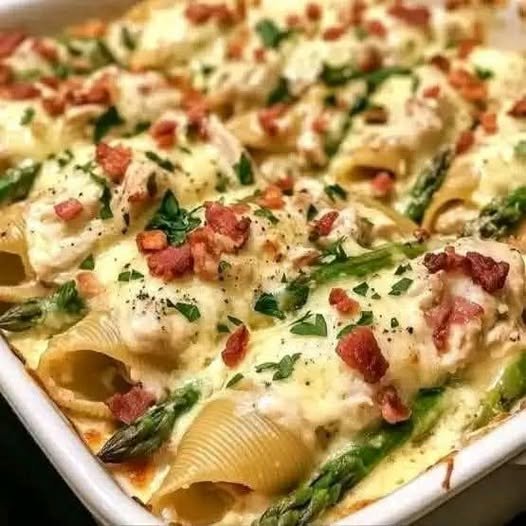
Instructions
- Preheat your oven to 375°F (190°C). Lightly grease a 9×13-inch baking dish.
- Cook the jumbo pasta shells according to package directions until al dente. This is crucial as they will continue to cook in the oven. Drain thoroughly and rinse with cold water to prevent sticking. Set aside.
- While the pasta cooks, prepare the filling. In a large skillet, heat 1 tablespoon of olive oil over medium heat. Add the trimmed and cut asparagus pieces and sauté for 5-7 minutes, or until tender-crisp. Remove from heat and set aside.
- In a large mixing bowl, combine the softened cream cheese, sour cream, milk, ranch seasoning mix, garlic powder, onion powder, and black pepper. Mix until smooth and well combined.
- Stir in the cooked and shredded chicken, crumbled bacon, sautéed asparagus, 1 cup of shredded mozzarella cheese, and 1/4 cup of grated Parmesan cheese into the cream cheese mixture. Mix gently until all ingredients are evenly distributed.
- If using a tomato-based sauce, spread the diced tomatoes (undrained) and tomato sauce evenly over the bottom of the prepared baking dish. If not using tomato sauce, you can simply spread a thin layer of the cream cheese mixture or a basic béchamel sauce if preferred for moisture.
- Carefully stuff each cooked pasta shell with a generous amount of the chicken and asparagus filling. A small spoon or even a piping bag (if you want to be extra tidy) works well for this. Arrange the stuffed shells in a single layer in the prepared baking dish.
- Once all shells are stuffed and arranged, sprinkle the remaining 1 cup of shredded mozzarella cheese and 1/4 cup of grated Parmesan cheese evenly over the top of the shells.
- Cover the baking dish loosely with aluminum foil. Bake for 25 minutes.
- Remove the foil and continue to bake for another 10-15 minutes, or until the cheese is melted, bubbly, and lightly golden brown. If you desire a more deeply golden and crispy cheese topping, you can broil for the last 1-2 minutes, watching very closely to prevent burning.
- Remove from the oven and let the dish rest for 5-10 minutes before serving. This allows the sauce to set and prevents the filling from spilling out.
- Garnish with fresh chopped parsley, if desired, and serve hot.
Cooking Tips and Variations
For the best results, ensure your pasta shells are cooked truly al dente, as they will soften further during baking. Overcooked shells can tear easily when stuffing. When stuffing, don’t overfill; a generous but manageable amount will ensure they hold their shape. To achieve that perfect golden-brown, bubbly cheese top, don’t skip the final few minutes of uncovered baking, and keep a close eye if you decide to broil. Letting the dish rest for a few minutes after baking is also key, as it allows the filling to set and prevents it from being too runny.
This recipe is highly versatile! Feel free to substitute chicken with shredded turkey, cooked shrimp, or even a can of drained and flaked tuna for a different protein. For a vegetarian option, omit the chicken and bacon and add extra sautéed vegetables like mushrooms, spinach (sautéed and squeezed dry), or bell peppers. If asparagus isn’t in season, broccoli florets, green beans, or peas make excellent substitutes. You can also play with the cheese blend; consider adding Monterey Jack, cheddar, or a spicy pepper jack for an extra kick. For a creamier sauce, a splash of heavy cream can be added to the filling mixture. If you like a little heat, a pinch of red pepper flakes can be mixed into the filling or sprinkled on top.
Storage and Reheating
To store any leftover Bacon Ranch Chicken & Asparagus Stuffed Shells, allow the dish to cool completely to room temperature. Once cooled, transfer the leftovers to an airtight container. They can be stored in the refrigerator for up to 3-4 days. For longer storage, you can freeze the stuffed shells. Place the cooled shells in a single layer on a baking sheet and freeze until solid. Once frozen, transfer them to a freezer-safe bag or container, separating layers with parchment paper if needed, and store for up to 2-3 months. Thaw frozen shells in the refrigerator overnight before reheating.
To reheat individual portions, you can microwave them until heated through, usually 1-2 minutes, depending on your microwave’s power. For larger portions or if reheating from the refrigerator, preheat your oven to 350°F (175°C). Place the stuffed shells in an oven-safe dish, cover loosely with foil, and bake for 20-30 minutes, or until heated through. If reheating from frozen (after thawing), follow the same oven instructions, but it may take a bit longer. If the dish seems dry, you can add a splash of milk or chicken broth before reheating to help restore moisture.
Frequently Asked Questions
Can I prepare these stuffed shells ahead of time?
Absolutely! You can assemble the entire dish, including stuffing the shells and topping with cheese, up to 24 hours in advance. Cover the baking dish tightly with plastic wrap or foil and refrigerate. When ready to bake, remove from the refrigerator about 30 minutes prior to baking to allow it to come closer to room temperature, then bake as directed, potentially adding an extra 5-10 minutes to the baking time to ensure it’s heated through.
What’s the best way to cook the chicken for this recipe?
You have a few options for the cooked chicken. You can boil chicken breasts until cooked through and then shred them with two forks. Alternatively, you can bake chicken breasts at 375°F (190°C) for 20-25 minutes until cooked, then dice or shred. Rotisserie chicken is also an excellent shortcut and a great way to save time; simply shred the meat from a pre-cooked rotisserie chicken.
My shells always tear when I stuff them. Any tips?
The most common reason for tearing is overcooking the pasta. Cook the shells until they are just al dente, meaning they still have a slight bite to them. Rinsing them with cold water immediately after draining also helps stop the cooking process and makes them easier to handle. Be gentle when stuffing, and if a shell does tear, don’t worry, it will still taste delicious!