Instructions
- Prepare the Toast: Toast your bread slices to your desired crispness. You can use a toaster, a toaster oven, or a pan over medium heat. Set aside.
- Prepare the Avocado Spread: While the bread is toasting, halve the avocado and remove the pit. Scoop out the flesh into a small bowl. Mash the avocado with a fork until it reaches your desired consistency (chunky or smooth). Season with a pinch of salt, freshly ground black pepper, and optional red pepper flakes.
- Scramble the Eggs: In a small bowl, whisk the two eggs with a pinch of salt and pepper until well combined. Heat 1 teaspoon of olive oil in a non-stick skillet over medium-low heat. Pour in the egg mixture. As the edges begin to set, gently push the cooked egg toward the center with a spatula, allowing the uncooked egg to flow underneath. Continue this process until the eggs are softly set and still slightly moist. Do not overcook.
- Assemble the Toast: Spread the mashed avocado evenly over each slice of toasted bread.
- Top the Toast: Divide the scrambled eggs equally and place them on top of the avocado layer.
- Add the Feta: Sprinkle the crumbled feta cheese generously over the scrambled eggs on both pieces of toast.
- Prepare the Garden Salad: In a separate small bowl, combine the mixed greens, halved cherry tomatoes, diced cucumber, and sliced Kalamata olives.
- Dress the Salad: Drizzle the extra virgin olive oil and fresh lemon juice over the salad. Season with a pinch of salt and freshly ground black pepper. Toss gently to combine.
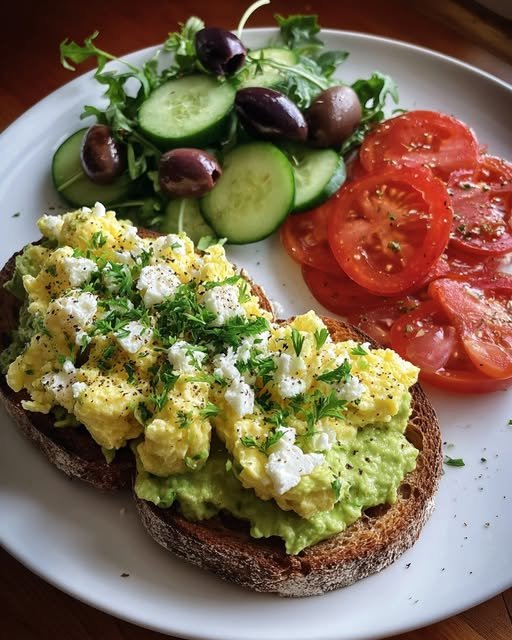
- Serve and Garnish: Arrange the avocado feta toast with scrambled eggs on a plate alongside the fresh garden salad. Garnish the toast with chopped fresh parsley or dill and an extra grind of black pepper, if desired. Serve immediately and enjoy!
Cooking Tips and Variations
For Perfectly Scrambled Eggs: The key to fluffy, tender scrambled eggs is low and slow cooking. Avoid high heat, which can make them rubbery. Stir gently and consistently, pulling the cooked egg from the sides to the center. For an extra creamy texture, you can whisk in a tablespoon of milk or cream with the eggs before cooking.
Choosing a Ripe Avocado: A perfectly ripe avocado will yield slightly to gentle pressure when squeezed in the palm of your hand. Avoid avocados that are too hard (under-ripe) or too soft (over-ripe and stringy). If your avocado isn’t quite ripe, you can speed up the process by placing it in a brown paper bag with an apple or banana for a day or two.
Bread Matters: While any bread works, a sturdy, crusty bread like sourdough or a dense whole wheat will hold up best to the toppings and provide a satisfying texture contrast. Gluten-free bread is also an excellent option for those with dietary restrictions.
Salad Dressing Variations: For the garden salad, you can get creative with your dressing. A balsamic vinaigrette, a light herb dressing, or even a simple drizzle of apple cider vinegar can be wonderful alternatives to lemon and olive oil. Feel free to add other salad ingredients like bell peppers, radishes, or red onion slices for extra crunch and flavor.
Spice It Up: If you love a little heat, a generous pinch of red pepper flakes or a dash of your favorite hot sauce on the avocado or eggs can add a fantastic kick.
Protein Boost: To make this meal even more substantial, consider adding other proteins. Crispy bacon or turkey bacon, smoked salmon, or even grilled halloumi cheese would be delicious additions to the toast.
Herb Power: Don’t underestimate the power of fresh herbs. Beyond parsley, chives, cilantro, or a sprinkle of dried oregano can elevate the flavor profile of both the eggs and the avocado.
Cheese Alternatives: If feta isn’t your favorite, feel free to substitute with goat cheese for a creamy tang, cotija for a saltier crumbly texture, or even a sprinkle of grated Parmesan.
Storage and Reheating
This dish is best enjoyed fresh, especially the avocado toast, as avocado tends to brown over time and toast can become soggy. However, if you have components prepared ahead of time or leftovers, here’s how to handle them:
Scrambled Eggs: Cooked scrambled eggs can be stored in an airtight container in the refrigerator for up to 2 days. To reheat, gently warm them in a non-stick skillet over low heat, stirring occasionally, or microwave in short bursts, stirring in between, until just warmed through. Be careful not to overcook them, as this can make them rubbery.
Mashed Avocado: Mashed avocado can be stored in an airtight container in the refrigerator for up to 1 day. To prevent browning, press plastic wrap directly onto the surface of the avocado before sealing the container. A squeeze of lemon or lime juice mixed in can also help. It’s best to mash the avocado just before assembling if possible.
Garden Salad: The undressed salad greens and vegetables can be stored separately in airtight containers in the refrigerator for up to 3-4 days. Store the dressing separately. Dress the salad just before serving to prevent wilting.
Assembled Toast: It’s generally not recommended to store the fully assembled toast. The toast will become soggy, and the avocado will brown. It’s best to assemble it right before eating.
Frequently Asked Questions
Can I prepare any components of this meal ahead of time?
Yes, you can definitely do some prep work in advance! You can wash and chop all your salad vegetables and store them in an airtight container. The scrambled eggs can be cooked and stored in the fridge for up to two days, and gently reheated. For the avocado, it’s best to mash it just before serving to prevent browning, but you can have the avocado ready to go. Toasting the bread and assembling the dish should always be done right before eating for the best texture and freshness.
What kind of bread works best for avocado toast?
For the best avocado toast experience, we recommend using a sturdy, dense bread that can hold up to the toppings without getting soggy. Sourdough, a good quality whole wheat, rye, or even a multigrain bread are excellent choices. Their robust crust and interior provide a wonderful textural contrast to the creamy avocado and soft eggs. Avoid very thin or soft white breads as they tend to become limp quickly.
How can I make this dish vegan?
Making this dish vegan is quite simple! For the scrambled eggs, you can substitute them with a tofu scramble (crumbled firm tofu seasoned with nutritional yeast, turmeric for color, and black salt for an eggy flavor) or a plant-based egg substitute. Replace the feta cheese with a vegan feta alternative or a sprinkle of nutritional yeast for a cheesy flavor. Ensure your bread is vegan, and the rest of the salad components are naturally plant-based. The overall flavor profile and satisfying texture can be easily maintained with these substitutions.