Instructions
- Prepare the Gelatin: In a small bowl, sprinkle the gelatin powder over the 3 tablespoons of cold water. Stir briefly and let it sit for 5-10 minutes, or until the gelatin has “bloomed” and become thick and spongy. This step is crucial for ensuring a smooth, lump-free panna cotta.
- Heat the Cream Mixture: In a medium saucepan, combine the heavy cream, whole milk, and granulated sugar. Place the saucepan over medium heat, stirring occasionally, until the sugar has completely dissolved and the mixture is hot but not boiling. You should see small bubbles forming around the edges of the pan. Do not bring it to a rolling boil, as this can affect the texture of the panna cotta.
- Dissolve the Gelatin: Remove the saucepan from the heat. Add the bloomed gelatin to the hot cream mixture. Whisk continuously for 1-2 minutes, ensuring that the gelatin is fully dissolved and there are no granules remaining. The residual heat from the cream will melt the gelatin.
- Add Vanilla: Stir in the pure vanilla extract. Taste a tiny bit of the mixture (carefully, it’s hot!) and adjust sweetness if desired, though the given amount is usually perfect.
- Prepare Molds: Lightly oil four 4-ounce ramekins, small bowls, or panna cotta molds with a neutral-flavored oil (like vegetable oil) or a non-stick cooking spray. This will help with easy unmolding later. Alternatively, you can serve the panna cotta directly in the molds without unmolding.
- Pour and Chill: Carefully pour the panna cotta mixture evenly into the prepared molds. Place the molds on a small baking sheet or tray for easy transport. Transfer to the refrigerator and chill for at least 4 hours, or preferably overnight, until the panna cotta is fully set and firm to the touch. The longer it chills, the better it will hold its shape.
- Make the Raspberry Sauce: While the panna cotta is chilling (or closer to serving time), prepare the raspberry sauce. In a small saucepan, combine the raspberries, 2 tablespoons of sugar, and lemon juice.
- Cook the Sauce: Place the saucepan over medium-low heat. Cook, stirring occasionally and gently mashing the raspberries with the back of a spoon, for 5-7 minutes, or until the raspberries have broken down and the sauce has thickened slightly.
- Strain the Sauce (Optional): For a super smooth sauce, press the cooked raspberry mixture through a fine-mesh sieve into a clean bowl, discarding the seeds. If you prefer a more rustic sauce with seeds, you can skip this step.
- Adjust Consistency and Sweetness: If the sauce is too thick, stir in a tablespoon of water until it reaches your desired consistency. Taste and add more sugar if you prefer a sweeter sauce. Let the sauce cool completely before serving.
- Unmold and Serve: To unmold the panna cotta, run a thin knife around the edge of each mold. Briefly dip the bottom of each mold into a bowl of warm water for about 10-15 seconds (don’t let water get into the panna cotta). Invert each mold onto a serving plate and gently shake or tap until the panna cotta releases. If it doesn’t release immediately, try dipping it in warm water for a few more seconds.
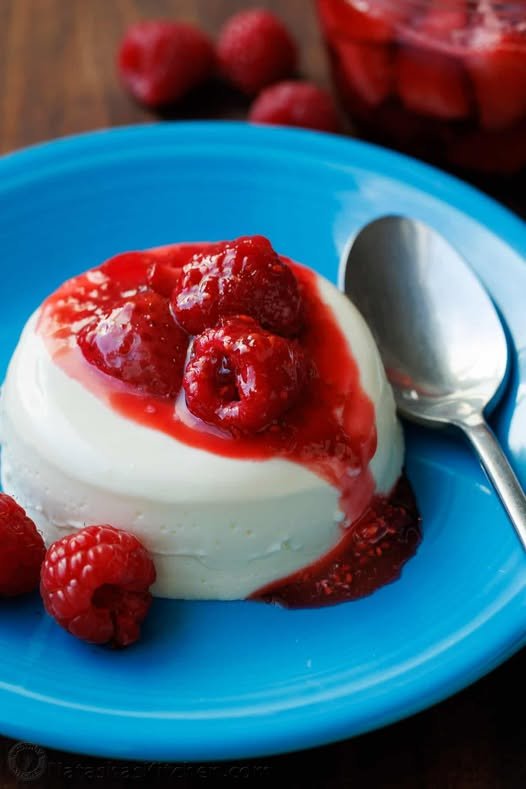
- Garnish and Enjoy: Spoon a generous amount of the cooled raspberry sauce over each unmolded panna cotta. Garnish with fresh raspberries and a sprig of mint, if desired. Serve immediately and enjoy your light, creamy, and utterly delightful dessert!
Cooking Tips and Variations
Achieving the perfect panna cotta is all about attention to a few key details. Firstly, always bloom your gelatin properly. Sprinkling it over cold water and letting it sit ensures it hydrates evenly, preventing lumps when you add it to the hot cream. When heating the cream mixture, remember the golden rule: hot, not boiling. A gentle simmering just until the sugar dissolves is ideal; boiling can lead to a grainier texture. For the vanilla, opt for pure vanilla extract or, even better, a vanilla bean scraped into the cream for an unparalleled depth of flavor. If using a vanilla bean, simmer it with the cream mixture, then remove it before adding the gelatin.
When it comes to unmolding, patience is key. Ensure your panna cotta is thoroughly chilled, ideally overnight, for the best set. The warm water bath trick for unmolding is a lifesaver, but be quick – you only want to warm the outside enough to release, not melt, the panna cotta. If you’re nervous about unmolding, consider serving the panna cotta directly in pretty glasses or small jars; they’ll look just as elegant and eliminate any stress.
Variations:
- Chocolate Panna Cotta: Stir 1/4 cup cocoa powder into the cream mixture with the sugar, and for a richer flavor, add 2 ounces of finely chopped good quality dark chocolate after removing from heat, stirring until melted.
- Coffee Panna Cotta: Add 2 tablespoons of instant espresso powder or very strong brewed coffee to the cream mixture.
- Citrus Panna Cotta: Infuse the cream with strips of orange or lemon zest while heating, then strain them out before adding gelatin. You can also add a teaspoon of citrus zest to the finished panna cotta before chilling.
- Coconut Panna Cotta: Substitute half of the heavy cream with full-fat coconut milk for a tropical twist.
- Other Fruit Sauces: While raspberry is divine, feel free to experiment! Strawberry, blueberry, mixed berry, or even a passion fruit sauce would be fantastic. Simply follow the same method for the raspberry sauce, adjusting sugar to taste.
- Vegan Panna Cotta: Substitute heavy cream and milk with full-fat coconut milk or a plant-based cream (like cashew or oat cream), and use agar-agar powder instead of gelatin. A typical substitution is 1 teaspoon of agar-agar powder for 1 packet of gelatin, but check package instructions as brands can vary.
Storage and Reheating
Panna cotta is an excellent make-ahead dessert, which makes it perfect for entertaining or simply having a delightful treat ready when a craving strikes. Once prepared and fully chilled, individual panna cottas (without the sauce) can be stored in their molds, covered tightly with plastic wrap, in the refrigerator for up to 3-4 days. This allows you to prepare them well in advance of a dinner party or special occasion, taking the stress out of last-minute dessert preparations.
The raspberry sauce should be stored separately from the panna cotta. Once cooled, transfer the sauce to an airtight container and refrigerate. It will keep well for up to 5-7 days. Storing them separately prevents the panna cotta from absorbing too much moisture from the sauce and helps maintain its pristine appearance and texture.
Panna cotta is typically served chilled, directly from the refrigerator. There is no reheating involved for the panna cotta itself. If you’ve stored the raspberry sauce in the refrigerator, it will likely be thicker when cold. If you prefer a slightly runnier sauce, you can gently warm it on the stovetop over low heat for a minute or two, or briefly in the microwave. Be careful not to overheat it, as you don’t want it to be hot when serving with the cold panna cotta. A lukewarm sauce is fine, but a chilled sauce is usually preferred for this dessert. Always stir the sauce after warming to ensure even consistency. When ready to serve, simply unmold the panna cottas (if desired) onto serving plates, spoon over the chilled or slightly warmed raspberry sauce, and garnish as you please. This dessert is truly at its best when served cool and fresh.
Frequently Asked Questions
What if my panna cotta doesn’t set?
If your panna cotta doesn’t set, it’s usually due to one of two reasons: either the gelatin wasn’t properly bloomed, or it wasn’t fully dissolved in the hot cream mixture. Ensure you sprinkle the gelatin over cold water and let it sit until spongy before adding it to the hot liquid. Also, whisk thoroughly after adding the bloomed gelatin to ensure it completely dissolves. If you’ve done this and it’s still too loose, you can gently reheat the mixture (don’t boil), add a little more bloomed gelatin, and re-chill.
Can I make panna cotta without gelatin?
Yes, you can! For a vegetarian or vegan alternative, agar-agar powder is a great substitute. Generally, 1 teaspoon of agar-agar powder can replace one packet (0.25 oz/7g) of gelatin, but always check the specific brand’s instructions as ratios can vary. Agar-agar needs to be simmered for a few minutes in a liquid to activate its setting properties, unlike gelatin which just dissolves in hot liquid. The texture will be slightly firmer than gelatin-based panna cotta.
Why is my panna cotta grainy?
A grainy panna cotta is often a result of boiling the cream mixture or not dissolving the sugar completely. Overheating can cause the proteins in the cream to curdle slightly, leading to a grainy texture. Also, if the sugar isn’t fully dissolved before adding the gelatin, it can crystallize as it cools. Always heat the cream gently until just hot and the sugar is completely dissolved, stirring frequently.
How long does panna cotta need to chill?
While panna cotta can be set enough to serve in about 4 hours, it’s always best to chill it for at least 6 hours, or preferably overnight. A longer chilling time ensures a firmer, more stable set, which is especially helpful if you plan to unmold it. This also allows the flavors to meld beautifully, resulting in a more delicious and satisfying dessert.