Instructions
- Preheat your oven to 400°F (200°C). Line a large, sturdy baking sheet with parchment paper for easier cleanup, if desired.
- Pat the chicken thighs thoroughly dry with paper towels. This is a crucial step for achieving crispy skin. Season both sides of the chicken with 1/2 teaspoon of salt and 1/2 teaspoon of black pepper. Set aside.
- In a large mixing bowl, combine the yellow potatoes, red potatoes, carrots, and red onion. Add 1/4 cup of olive oil, minced garlic, fresh rosemary, fresh thyme, 1 teaspoon of salt, and 1/2 teaspoon of black pepper. Toss vigorously until all the vegetables are evenly coated with the oil and seasonings.
- Spread the seasoned vegetables in a single layer on the prepared baking sheet. Ensure there’s enough space between them for even roasting.
- Place the seasoned chicken thighs on top of the vegetables, skin-side up. Try to arrange them so that the skin is exposed and not covered by vegetables, as this will help it crisp up. Drizzle the remaining 1 tablespoon of olive oil lightly over the chicken skin.
- Roast in the preheated oven for 30 minutes.
- After 30 minutes, carefully remove the baking sheet from the oven. Add the trimmed green beans to the baking sheet, tossing them gently with some of the pan drippings and other vegetables.
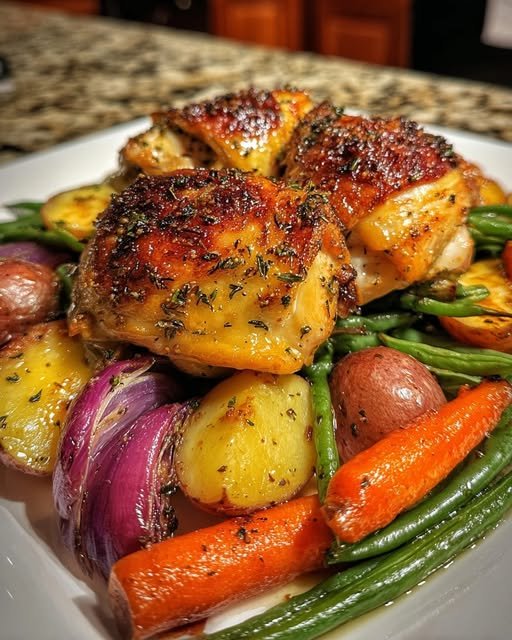
- Return the baking sheet to the oven and continue roasting for another 20-25 minutes, or until the chicken skin is golden brown and crispy, and the internal temperature of the thickest part of the chicken thigh reaches 175°F (80°C) with an instant-read thermometer. The vegetables should be tender and slightly caramelized.
- Once cooked, remove the baking sheet from the oven. Let the chicken rest for 5-10 minutes before serving. This allows the juices to redistribute, ensuring the chicken remains moist and tender.
- Serve immediately, enjoying the delicious combination of crispy chicken and perfectly roasted vegetables.
Cooking Tips and Variations
For the crispiest chicken skin, ensure your chicken thighs are bone-in and skin-on, and always pat them thoroughly dry before seasoning. A very hot oven is also key, so don’t be afraid to crank up the heat. If you find the skin isn’t crisping up enough, you can briefly switch to the broiler for the last 2-3 minutes, but watch it very closely to prevent burning.
Don’t overcrowd your baking sheet! If you’re doubling the recipe or have a smaller baking sheet, use two sheets. Overcrowding leads to steaming rather than roasting, resulting in soggy vegetables and less crispy chicken. Ensure there’s a little space between each piece of chicken and vegetable for optimal browning.
Feel free to experiment with different vegetables based on what’s in season or what you have on hand. Broccoli florets, cauliflower, bell peppers (any color), parsnips, or even Brussels sprouts would make excellent additions or substitutions. Just be mindful of their cooking times; harder root vegetables can go in at the beginning, while softer vegetables like bell peppers might be added halfway through.
Enhance the flavor profile with different herbs. Dried oregano, marjoram, or even a touch of smoked paprika can add a wonderful dimension. A squeeze of fresh lemon juice over the finished dish brightens all the flavors, while a sprinkle of fresh parsley adds a touch of color and freshness.
For a touch of sweetness and glaze, consider drizzling a tablespoon of balsamic glaze or a teaspoon of honey mixed with a splash of apple cider vinegar over the chicken and vegetables during the last 10 minutes of cooking. This creates a beautiful caramelization and a complex flavor.
If you prefer a little heat, add a pinch of red pepper flakes to your vegetable seasoning mix. For a deeper, more umami flavor, a teaspoon of onion powder or garlic powder can be added along with the fresh herbs.
Always use an instant-read thermometer to check the internal temperature of the chicken. While the general guideline is 175°F (80°C) for thighs, some prefer to cook them to 185°F (85°C) for even more tenderness without drying them out. The key is to avoid undercooking for safety and overcooking for moisture.
Serving suggestions are endless! This dish is a complete meal on its own, but it pairs wonderfully with a simple green salad with a light vinaigrette, a side of fluffy quinoa, or a slice of crusty bread to soak up all those delicious pan juices.
Storage and Reheating
This One-Pan Roasted Chicken Thighs with Vegetables recipe is excellent for meal prep and makes for delicious leftovers. To store, allow the cooked chicken and vegetables to cool completely to room temperature. This is important to prevent condensation and maintain quality. Once cooled, transfer them to an airtight container. They can be stored in the refrigerator for up to 3-4 days.
For reheating, the best method to retain flavor and texture is in the oven. Preheat your oven to 350°F (175°C). Spread the chicken and vegetables in a single layer on a baking sheet. You may want to add a splash of water or broth to the pan to prevent drying, especially for the chicken. Heat for 15-20 minutes, or until thoroughly warmed through. The chicken skin may not be as crispy as when freshly made, but it will still be delicious.
Alternatively, you can reheat individual portions in the microwave. Place the chicken and vegetables on a microwave-safe plate and heat on medium power for 2-3 minutes, or until hot. Be aware that microwaving may make the chicken skin less crispy and the vegetables softer, but it’s a convenient option for a quick meal.
Freezing is not generally recommended for this dish, especially the potatoes and green beans, as their texture can become mushy upon thawing and reheating. However, if you only want to freeze the cooked chicken thighs, they can be stored in an airtight freezer-safe container for up to 2-3 months. Thaw overnight in the refrigerator before reheating.
When reheating, always ensure the food reaches an internal temperature of 165°F (74°C) for safety.
Frequently Asked Questions
Can I use boneless, skinless chicken thighs instead?
Yes, you can use boneless, skinless chicken thighs, but the cooking time will be shorter, typically around 25-30 minutes total. Keep in mind that boneless, skinless thighs will not yield the same crispy skin or as rich a flavor as their bone-in, skin-on counterparts, as the bone and skin contribute significantly to moisture and taste. Adjust your cooking time accordingly and always check for doneness with a meat thermometer.
What if my vegetables aren’t tender by the time the chicken is cooked?
If your vegetables are still too firm when the chicken is done, it could be due to a few factors: the vegetables were cut too large, your oven temperature might be slightly off, or the pan was overcrowded. Next time, try cutting the vegetables into smaller, more uniform pieces. You can also remove the cooked chicken from the pan and cover it loosely with foil to rest, then return the vegetables to the oven for an additional 5-10 minutes until they reach your desired tenderness.
Can I prepare this dish ahead of time?
You can definitely do some prep work in advance. Chop all the vegetables and store them in separate airtight containers in the refrigerator for up to 2 days. You can also mince the garlic and chop the herbs. However, it’s best to season the chicken and toss the vegetables with oil and seasonings just before roasting to prevent the vegetables from becoming watery and to ensure the chicken skin crisps up properly.