Instructions
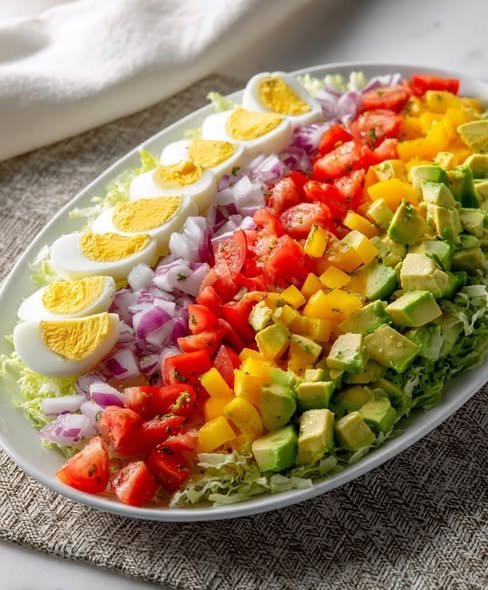
1. Classic Cobb Salad with a Zesty Vinaigrette
- Prepare bacon: Cook bacon until crisp, drain on paper towels, then crumble.
- Prepare eggs: If not already hard-boiled, boil eggs for 9-12 minutes, cool in ice water, peel, and chop.
- Prepare chicken: If using raw chicken, cook, cool, and dice or shred.
- Assemble salad: In a large bowl or on individual plates, arrange mixed greens as the base. Artfully arrange rows of chopped eggs, diced chicken, crumbled bacon, cherry tomatoes, diced avocado, sliced red onion, and crumbled blue cheese over the greens.
- Make vinaigrette: In a small bowl, whisk together olive oil, red wine vinegar, Dijon mustard, honey, minced garlic, salt, and pepper until emulsified.
- Dress and serve: Drizzle the vinaigrette over the salad just before serving. Toss gently if serving in a bowl.
2. Mediterranean Quinoa Salad
- Cook quinoa: Rinse quinoa thoroughly. Combine quinoa and vegetable broth (or water) in a saucepan. Bring to a boil, then reduce heat to low, cover, and simmer for 15 minutes, or until all liquid is absorbed. Fluff with a fork and let cool.
- Prepare vegetables: While quinoa cools, dice cucumber, halve cherry tomatoes, halve Kalamata olives, and finely dice red onion. Chop fresh parsley.
- Make dressing: In a small bowl, whisk together olive oil, fresh lemon juice, dried oregano, salt, and pepper.
- Combine: In a large bowl, combine cooled quinoa, cucumber, cherry tomatoes, olives, red onion, and crumbled feta cheese. Pour the dressing over the salad and toss gently to combine.
- Garnish and serve: Stir in chopped fresh parsley. Serve chilled or at room temperature.
3. Strawberry Spinach Salad with Poppy Seed Dressing
- Prepare spinach: Wash and dry spinach thoroughly.
- Prepare strawberries: Slice fresh strawberries.
- Toast nuts: If using raw pecans or walnuts, toast them lightly in a dry pan over medium heat for 3-5 minutes until fragrant. Let cool.
- Assemble salad: In a large bowl, combine spinach, sliced strawberries, toasted nuts, and crumbled goat cheese (if using).
- Make dressing: In a small bowl, whisk together olive oil, apple cider vinegar, honey, poppy seeds, Dijon mustard, salt, and pepper until well combined.
- Dress and serve: Drizzle the dressing over the salad just before serving and toss gently.
4. Grilled Halloumi and Peach Salad
- Prepare peaches: Wash and slice peaches.
- Prepare halloumi: Slice halloumi cheese into 1/2-inch thick pieces.
- Grill halloumi and peaches: Heat a grill pan or outdoor grill to medium-high heat. Lightly brush halloumi and peach slices with a tiny bit of olive oil to prevent sticking. Grill peaches for 2-3 minutes per side until grill marks appear and they are slightly softened. Grill halloumi for 2-3 minutes per side until golden brown and tender.
- Make balsamic glaze: In a small saucepan, combine balsamic vinegar and honey (or brown sugar). Bring to a simmer over medium heat, then reduce heat to low and cook for 5-7 minutes, stirring occasionally, until the glaze thickens enough to coat the back of a spoon. Be careful not to let it burn. Let cool slightly.
- Assemble salad: Arrange arugula or mixed greens on a serving platter or individual plates. Top with grilled peaches, grilled halloumi, thinly sliced red onion, and chopped fresh mint.
- Dress and serve: Drizzle the balsamic glaze generously over the salad just before serving.
5. Thai Peanut Noodle Salad
- Cook noodles: Cook whole wheat spaghetti or rice noodles according to package directions. Drain and rinse with cold water to prevent sticking.
- Prepare vegetables: Thinly slice red bell pepper, julienne or shred carrot and cucumber. Chop cilantro and peanuts.
- Make dressing: In a medium bowl, whisk together peanut butter, soy sauce, rice vinegar, honey, lime juice, grated ginger, and minced garlic. Slowly whisk in warm water, one tablespoon at a time, until the dressing reaches your desired consistency (should be pourable but still creamy).
- Combine: In a large bowl, add the cooked and cooled noodles, sliced bell pepper, shredded carrot, julienned cucumber, and chopped cilantro.
- Dress and serve: Pour the peanut dressing over the noodle mixture and toss well to coat all ingredients. Garnish with chopped peanuts before serving. Serve chilled or at room temperature.
6. Roasted Vegetable and Chickpea Salad
- Preheat oven: Preheat oven to 400°F (200°C).
- Prepare vegetables: Drain and rinse chickpeas. Chop red bell pepper, zucchini, red onion, and broccoli florets.
- Roast vegetables: On a large baking sheet, combine chickpeas, red bell pepper, zucchini, red onion, and broccoli. Drizzle with olive oil, sprinkle with smoked paprika, cumin, salt, and pepper. Toss to coat evenly. Roast for 20-25 minutes, or until vegetables are tender-crisp and slightly caramelized, stirring halfway through. Let cool slightly.
- Make tahini dressing: In a small bowl, whisk together tahini, fresh lemon juice, olive oil, minced garlic, and salt. Gradually whisk in cold water, one tablespoon at a time, until the dressing is smooth and reaches a pourable consistency.
- Assemble salad: In a large bowl, combine mixed greens and the slightly cooled roasted vegetables and chickpeas.
- Dress and serve: Drizzle the tahini-lemon dressing over the salad and toss gently to combine. Serve immediately.
7. Caprese Salad with Balsamic Glaze
- Make balsamic glaze: In a small saucepan, combine balsamic vinegar and honey (or brown sugar). Bring to a simmer over medium heat, then reduce heat to low and cook for 5-7 minutes, stirring occasionally, until the glaze thickens enough to coat the back of a spoon. Let cool slightly.
- Prepare tomatoes and mozzarella: Wash and slice ripe tomatoes and fresh mozzarella.
- Assemble salad: On a serving platter, arrange alternating slices of tomato and mozzarella. Tuck fresh basil leaves between the slices.
- Dress and serve: Drizzle the cooled balsamic glaze generously over the salad. Serve immediately.
8. Black Bean and Corn Salad with Avocado-Lime Dressing
- Prepare vegetables: Drain and rinse black beans. If using fresh corn, cook briefly and cut off kernels. Dice red bell pepper and finely dice red onion. Chop cilantro.
- Make avocado-lime dressing: In a blender or food processor, combine ripe avocado, fresh lime juice, water, minced garlic, cumin, salt, and pepper. Blend until smooth and creamy. Add more water if needed to reach desired consistency.
- Combine salad ingredients: In a large bowl, combine black beans, corn, diced red bell pepper, finely diced red onion, and chopped cilantro.
- Dress and serve: Pour the avocado-lime dressing over the salad ingredients and toss gently to combine. Serve chilled.
9. Lentil and Roasted Sweet Potato Salad
- Preheat oven: Preheat oven to 400°F (200°C).
- Roast sweet potato: Peel and cube sweet potato. Toss with olive oil, smoked paprika, salt, and pepper on a baking sheet. Roast for 20-25 minutes, or until tender and slightly caramelized, stirring halfway through. Let cool slightly.
- Prepare lentils: Ensure lentils are cooked and cooled.
- Make maple-mustard vinaigrette: In a small bowl, whisk together olive oil, apple cider vinegar, Dijon mustard, maple syrup, salt, and pepper until emulsified.
- Assemble salad: In a large bowl, combine spinach or kale, cooled roasted sweet potatoes, and cooked lentils.
- Dress and serve: Pour the vinaigrette over the salad and toss gently. Garnish with toasted pumpkin seeds before serving.
10. Watermelon Feta Mint Salad
- Prepare watermelon: Cube watermelon and remove any seeds.
- Prepare mint: Roughly chop fresh mint leaves.
- Assemble salad: In a large bowl, gently combine cubed watermelon, crumbled feta cheese, and chopped fresh mint.
- Dress and serve: Drizzle with fresh lime juice and a pinch of black pepper. Toss gently and serve immediately or chill briefly.
11. Sesame Ginger Chicken Salad
- Prepare chicken: Ensure chicken breast is cooked and shredded.
- Prepare vegetables: Shred red cabbage and carrots. Thinly slice snap peas and green onions. Chop cilantro.
- Make dressing: In a small bowl, whisk together soy sauce, rice vinegar, sesame oil, honey, grated ginger, minced garlic, and red pepper flakes (if using).
- Combine: In a large bowl, combine shredded chicken, red cabbage, carrots, snap peas, green onions, and cilantro.
- Dress and serve: Pour the sesame ginger dressing over the salad ingredients and toss well to combine. Garnish with toasted sesame seeds before serving.
12. Pear and Gorgonzola Salad with Candied Pecans
- Prepare pears: Wash and thinly slice ripe pears.
- Make maple balsamic vinaigrette: In a small bowl, whisk together olive oil, balsamic vinegar, maple syrup, Dijon mustard, salt, and pepper until emulsified.
- Assemble salad: In a large bowl, combine mixed greens. Top with thinly sliced pears, crumbled gorgonzola cheese, and candied pecans.
- Dress and serve: Drizzle the maple balsamic vinaigrette over the salad just before serving.
Cooking Tips and Variations
Ingredient Quality is Key: Always start with the freshest possible ingredients. This is especially true for salads, where the raw flavors truly shine. Seek out seasonal produce for the best taste and nutritional value.
Proper Washing and Drying: For leafy greens, thorough washing is crucial. Use a salad spinner to ensure your greens are completely dry before dressing. Excess water will dilute your dressing and make your salad soggy.
Cutting Consistency: Aim for uniform cuts for your vegetables and proteins. This ensures that every bite has a balanced texture and flavor, and it also makes for a more visually appealing salad.
Dressing on the Side (or Just Before Serving): To prevent soggy salads, always add dressing just before serving. If you’re packing a salad for lunch, store the dressing in a separate container and add it right before you eat. For leafy green salads, a light coating is usually sufficient.
Homemade Dressings are Superior: While store-bought dressings are convenient, making your own allows you to control the ingredients, sugar, and sodium content. Plus, they taste infinitely better! Experiment with different oils, vinegars, citrus juices, herbs, and spices.
Balance Your Flavors: A great salad dressing (and salad overall) has a balance of sweet, sour (acid), savory, and sometimes a touch of bitterness or spice. Think about adding a sweet element (fruit, honey), an acidic one (vinegar, lemon), a savory one (cheese, nuts, protein), and a fresh herb.
Layering for Success: When building a salad, especially for presentation, think in layers. Start with greens, then heavier vegetables or grains, then proteins, and finally lighter toppings like cheese, nuts, or herbs. This also helps prevent delicate ingredients from getting crushed.
Texture Contrast: Incorporate ingredients that offer different textures. Crunchy nuts or croutons, creamy avocado, crisp vegetables, and tender proteins all contribute to a more interesting and satisfying salad.
Protein Power-Ups: Many of these salads can be made into a full meal by adding a protein. Consider grilled chicken, shrimp, steak, baked tofu, chickpeas, or hard-boiled eggs. These additions boost satiety and make your salad more substantial.
Grain Variations: Quinoa can often be swapped with other grains like farro, couscous, or bulgur for different textures and nutritional profiles.
Nut and Seed Swaps: Pecans, walnuts, almonds, pumpkin seeds, sunflower seeds, and sesame seeds can often be interchanged in recipes based on preference or what you have on hand. Toasting them always enhances their flavor.
Cheese Substitutions: Feta can be swapped with goat cheese or crumbled cotija. Blue cheese can be replaced with a sharp cheddar or parmesan for a milder flavor.
Herb Experimentation: Don’t be afraid to try different fresh herbs. Parsley, cilantro, mint, basil, and dill each bring unique aromas and flavors that can transform a salad.
Spice It Up: A pinch of red pepper flakes, a dash of hot sauce in the dressing, or even some thinly sliced jalapeños can add a welcome kick to many of these recipes.
Roasting Vegetables: Roasting vegetables brings out their natural sweetness and adds a depth of flavor that raw vegetables don’t have. This works wonderfully for carrots, bell peppers, zucchini, broccoli, sweet potatoes, and even cherry tomatoes.
Make-Ahead Components: Many elements of these salads can be prepared in advance. Cook grains, roast vegetables, make dressings, and chop hardier vegetables a day or two ahead. Store them separately and combine just before serving.
Storage and Reheating
General Salad Storage: The key to storing salads is to keep the dressing separate from the main ingredients. Once dressed, most leafy green salads will become soggy quickly.
- Undressed Salads: Store undressed salads (greens, chopped vegetables, proteins, and other solid ingredients) in an airtight container in the refrigerator for 2-4 days, depending on the freshness of the ingredients. Layering with a paper towel can help absorb excess moisture and keep greens crisp.
- Dressings: Homemade vinaigrettes and creamy dressings can be stored in an airtight jar or container in the refrigerator for up to 5-7 days. Shake well before each use.
- Cooked Grains/Proteins: Cooked quinoa, lentils, roasted vegetables, or chicken can be stored separately in airtight containers in the refrigerator for 3-4 days.
Specific Recipe Storage Notes:
- Cobb Salad: Store all components (greens, eggs, bacon, chicken, tomatoes, avocado, onion, blue cheese) separately. Avocado should be diced just before serving to prevent browning.
- Quinoa, Lentil, Noodle, and Roasted Vegetable Salads: These types of salads, especially if they are grain or bean-based and don’t contain delicate greens, often store very well dressed for 2-3 days in the refrigerator, as the ingredients can absorb the dressing flavors.
- Avocado: To prevent diced avocado from browning in a salad you plan to store, toss it gently with a little lemon or lime juice before adding it to the mix. It’s still best to add avocado just before serving if possible.
- Fruit Salads (e.g., Watermelon Feta): Best consumed fresh, but can be stored for up to 1 day in the refrigerator. The fruit will release more liquid over time.
Reheating:
- Most Salads are Served Cold: The majority of these recipes are intended to be served chilled or at room temperature, so no reheating is necessary for the assembled salad.
- Roasted/Grilled Components: If you have leftover roasted vegetables or grilled chicken/halloumi that you want to serve warm, you can gently reheat them separately in a microwave or a pan before adding them to fresh greens and dressing. Be careful not to overcook.
- Noodle Salads: Thai Peanut Noodle Salad is delicious cold, but if you prefer the noodles warm, you can briefly warm them in the microwave or a pan before tossing with the dressing and other fresh ingredients.
Frequently Asked Questions
Can I prepare these salads ahead of time for meal prep?
Absolutely! Most of these salads are excellent for meal prepping. The key is to store the components separately. Prepare your proteins (cook chicken, hard-boil eggs), chop hardier vegetables, cook grains like quinoa or lentils, and make your dressings in advance. Store each component in individual airtight containers in the refrigerator. When it’s time to eat, simply assemble your salad with fresh greens and dress it just before serving. Delicate ingredients like avocado or soft fruits should be added on the day of consumption.
How can I make my salads more filling and satisfying as a main course?
To turn a salad into a hearty main course, focus on adding a good balance of protein, healthy fats, and complex carbohydrates. Incorporate generous portions of lean protein such as grilled chicken, fish, tofu, tempeh, or legumes (chickpeas, lentils, black beans). Add healthy fats from avocado, nuts, seeds, or a rich olive oil-based dressing. Grains like quinoa, farro, or brown rice can significantly boost the satiety of your salad, as can roasted starchy vegetables like sweet potatoes. Don’t be shy with fiber-rich vegetables!
What are some common mistakes to avoid when making salads?
One of the most common mistakes is not properly drying your greens, which leads to diluted, watery dressing. Over-dressing is another frequent pitfall; a little goes a long way, and you can always add more. Using only iceberg lettuce can lead to a bland salad; experiment with various leafy greens for better flavor and nutrition. Lastly, a lack of textural variety can make a salad boring; aim for a mix of crisp, creamy, crunchy, and tender elements to keep things interesting.