Instructions
- Roast the Tomatoes: Preheat your oven to 400°F (200°C). On a baking sheet, toss the cherry tomatoes with 2 tablespoons of olive oil, a pinch of salt, and a grind of black pepper. Roast for 20-25 minutes, or until the tomatoes are slightly shriveled, bursting, and lightly caramelized.
- Cook the Pasta: While the tomatoes are roasting, bring a large pot of heavily salted water to a rolling boil. Add the penne pasta and cook according to package directions until al dente. Before draining, reserve about 1 cup of the starchy pasta water. Drain the pasta and set aside.
- Prepare the Shrimp: Pat the shrimp thoroughly dry with paper towels. Season the shrimp with salt and black pepper. In a large skillet or Dutch oven, heat the remaining 2 tablespoons of olive oil over medium-high heat. Once hot, add the shrimp in a single layer (cook in batches if necessary to avoid overcrowding). Cook for 1-2 minutes per side, until pink and opaque. Remove the shrimp from the skillet and set aside.
- Make the Garlic Cream Sauce: Reduce the heat to medium. Add the butter to the same skillet. Once melted, add the minced garlic and red pepper flakes (if using). Sauté for about 1 minute, stirring constantly, until fragrant. Be careful not to burn the garlic.
- Deglaze (Optional) and Add Cream: If using, pour in the white wine and scrape up any browned bits from the bottom of the pan. Let it simmer for 1-2 minutes until slightly reduced. Pour in the heavy cream and bring it to a gentle simmer, stirring occasionally. Let it cook for 3-5 minutes, allowing the sauce to thicken slightly.
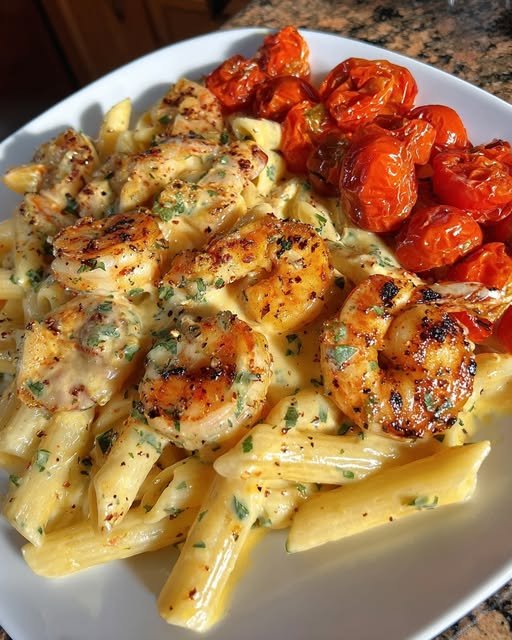
- Combine and Finish: Stir in the grated Parmesan cheese until melted and smooth. Add the roasted tomatoes, cooked pasta, and cooked shrimp to the skillet with the sauce. Toss everything together, ensuring the pasta and shrimp are well coated. If the sauce is too thick, add a splash of the reserved pasta water, a tablespoon at a time, until it reaches your desired consistency.
- Season and Serve: Stir in the fresh parsley. Taste and adjust seasoning with additional salt and pepper if needed. Serve immediately, garnished with extra fresh parsley and a sprinkle of Parmesan cheese.
Cooking Tips and Variations
For truly perfect shrimp, ensure they are completely dry before searing. This helps them get a beautiful golden crust instead of steaming. Don’t overcrowd the pan; cook the shrimp in batches if needed. Overcooked shrimp become tough and rubbery, so remove them from the heat as soon as they turn pink and opaque. When making the sauce, keep an eye on the garlic. It can go from perfectly fragrant to burnt very quickly, which will impart a bitter taste. If you’re sensitive to spice, omit the red pepper flakes. For an extra layer of flavor, consider adding a squeeze of fresh lemon juice at the end to brighten the dish.
This recipe is incredibly versatile. For a vegetable boost, stir in fresh spinach or sautéed mushrooms along with the roasted tomatoes. You can swap out penne for other pasta shapes like fettuccine, linguine, or even spaghetti for a different texture. If you prefer a lighter sauce, you can use half-and-half instead of heavy cream, though the richness will be slightly reduced. Experiment with different cheeses; Asiago or Pecorino Romano can add a sharper, saltier note. To make it a little spicier, increase the red pepper flakes or add a dash of hot sauce to the cream. For a smoky flavor, a pinch of smoked paprika can be a wonderful addition to the sauce.
Storage and Reheating
Leftovers of this Creamy Garlic Shrimp Pasta can be stored in an airtight container in the refrigerator for up to 2-3 days. While the texture of the shrimp might soften slightly upon reheating, the flavors will still be delicious. It’s generally not recommended to freeze creamy pasta dishes, as the sauce can separate and become grainy when thawed and reheated.
To reheat, the best method is gently on the stovetop. Add the pasta to a skillet with a splash of milk, cream, or chicken broth (about 1-2 tablespoons per serving) to help rehydrate the sauce. Heat over medium-low heat, stirring occasionally, until warmed through. Be careful not to overheat, as this can make the shrimp rubbery. You can also microwave individual portions in a microwave-safe dish, adding a small amount of liquid, and heating in 30-second intervals, stirring in between, until hot.
Frequently Asked Questions
Can I use pre-cooked shrimp for this recipe?
While you technically can, it’s highly recommended to use raw shrimp. Pre-cooked shrimp tend to become rubbery and tough when reheated or cooked further in the sauce, detracting from the overall texture of the dish. If you must use pre-cooked, add them in during the very last step, just to warm through, instead of searing them initially.
What is the best way to prevent the cream sauce from separating?
To prevent the cream sauce from separating, ensure you’re using heavy cream, not a lower-fat dairy product, as heavy cream is more stable. Also, avoid boiling the sauce vigorously once the cream and cheese are added. Keep it at a gentle simmer. If it does look like it’s starting to separate, a quick whisk or a tiny splash of cold milk or cream might help bring it back together.
Can I make this dish gluten-free?
Absolutely! Simply substitute the regular penne pasta with your favorite gluten-free pasta. The rest of the ingredients are naturally gluten-free. Make sure to check the labels on any broth or Parmesan cheese if you have very strict dietary requirements.
I don’t have white wine. What can I use instead for deglazing?
If you prefer not to use white wine or don’t have any on hand, you can easily substitute it with an equal amount of chicken broth or vegetable broth. A splash of lemon juice (about 1-2 tablespoons) can also add a nice acidity if you’re looking to replicate that element from the wine.